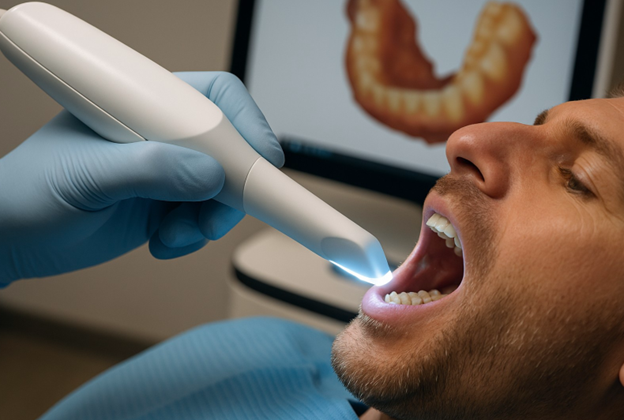
In the fast-paced world of implant dentistry, intraoral scanning has become a cornerstone of digital workflows. Whether you’re transitioning to digital or upgrading your current system, selecting the right scanner is crucial for improving accuracy, efficiency, and patient satisfaction.
This guide outlines the key factors to help you make the best choice for your implant-focused practice.
What is an Intraoral Scanner, and Why is it Essential for Implant Dentistry?
An intraoral scanner captures high-resolution, 3D images of the oral cavity. These digital impressions replace traditional molds and are used to:
- Plan precise implant placement
- Design abutments and restorations
- Create surgical guides
- Integrate with CAD/CAM and CBCT systems
Benefits include improved accuracy, reduced chair time, better patient comfort, and seamless digital integration.
Key Factors to Consider When Choosing an Intraoral Scanner
1. Accuracy and Scan Resolution
In implant dentistry, precision is non-negotiable.
- Look for scanners with sub-millimeter accuracy
- High-resolution scans are essential for capturing fine details of the soft tissue and implant margins
Tip: Prioritize accuracy for predictable outcomes in custom abutments, guides, and restorations.
2. Speed and Workflow Integration
A good scanner should enhance—not slow down—your workflow.
- Capture full-arch scans in under 2–3 minutes
- Choose scanners that integrate with CBCT, CAD/CAM, and lab software
- Wireless options add flexibility in operatory environments
Tip: A well-integrated scanner simplifies planning and reduces turnaround times for implant cases.
3. Patient Comfort and Ease of Use
Comfortable patients = better scans.
- Choose a scanner with a slim, ergonomic design
- Look for small scan tips that minimize gag reflex
- Ensure a user-friendly interface and real-time scan feedback
Tip: Comfortable scanning improves precision and patient experience.
4. Software Compatibility and Features
Software determines what your scanner can really do.
- Look for implant planning integration
- Features like margin detection, scan stitching, and guided surgery planning are critical
- Ensure compatibility with your current digital systems
Tip: Choose a scanner with advanced software options to support complex implant workflows.
5. Data Sharing and Communication with Labs
Fast, secure digital sharing is key.
- Look for cloud-based file management
- Support for STL, DICOM, or PLY formats ensures lab compatibility
- Some scanners offer direct lab portals for file exchange
Tip: Digital collaboration with labs improves turnaround and reduces errors.
6. Cost vs. Value
Scanners are a long-term investment.
- Evaluate total cost, including software licenses and support
- Consider warranty, maintenance, and training options
- Balance initial investment with improved productivity and reduced remakes
Tip: Value isn’t just in price—consider efficiency, support, and future scalability.
Conclusion: The Right Scanner Can Transform Your Implant Workflow
Choosing the right intraoral scanner is about aligning technology with your clinical needs. The ideal device will:
- Deliver high accuracy for implant planning
- Speed up procedures and reduce chair time
- Enhance communication with labs
- Provide a more comfortable experience for patients
- Integrate smoothly into your digital ecosystem
Invest wisely—and your intraoral scanner will become a powerful tool for delivering predictable, high-quality implant outcomes in a fully digital environment.