Predictable Guided Bone Regeneration Around Dental Implants
Build the clinical decision-making and surgical technique behind predictable GBR outcomes, with hands-on training on pig jaws inside ADI's Cadaver Lab.

What You'll Learn
Most GBR outcomes are decided before the first incision. This course works through that decision-making, from diagnosis to surgical execution, so the technique becomes predictable, not situational.
-
Evaluate implant sites using a systematic GBR treatment planning protocol.
-
Select graft materials and membranes based on defect morphology and scientific evidence.
-
Perform predictable horizontal ridge augmentation around implants.
-
Execute tension-free flap closure using advanced soft tissue management techniques.
-
Determine when immediate implant placement with simultaneous GBR is appropriate.
-
Identify patients at increased risk for regenerative complications.
-
Prevent and manage membrane exposure, wound dehiscence, graft infection, and incomplete bone regeneration.
-
Apply evidence-based surgical protocols that improve long-term implant success while reducing complications.
-
Develop a repeatable clinical workflow that can be implemented immediately in private practice.
Who This Course Is For
-
Dentists placing implants who want to confidently incorporate guided bone regeneration (GBR) into their clinical practice
-
Clinicians who want to improve their ability to diagnose, plan, and treat bone-deficient implant sites
-
Practitioners seeking greater predictability in bone augmentation procedures through proper case selection and surgical technique
-
Dentists looking for hands-on experience with flap design, graft placement, membrane management, and suturing techniques
-
Clinicians who want to expand the range of implant cases they can manage in their own practice
Hands-On Training in ADI's Cadaver Lab
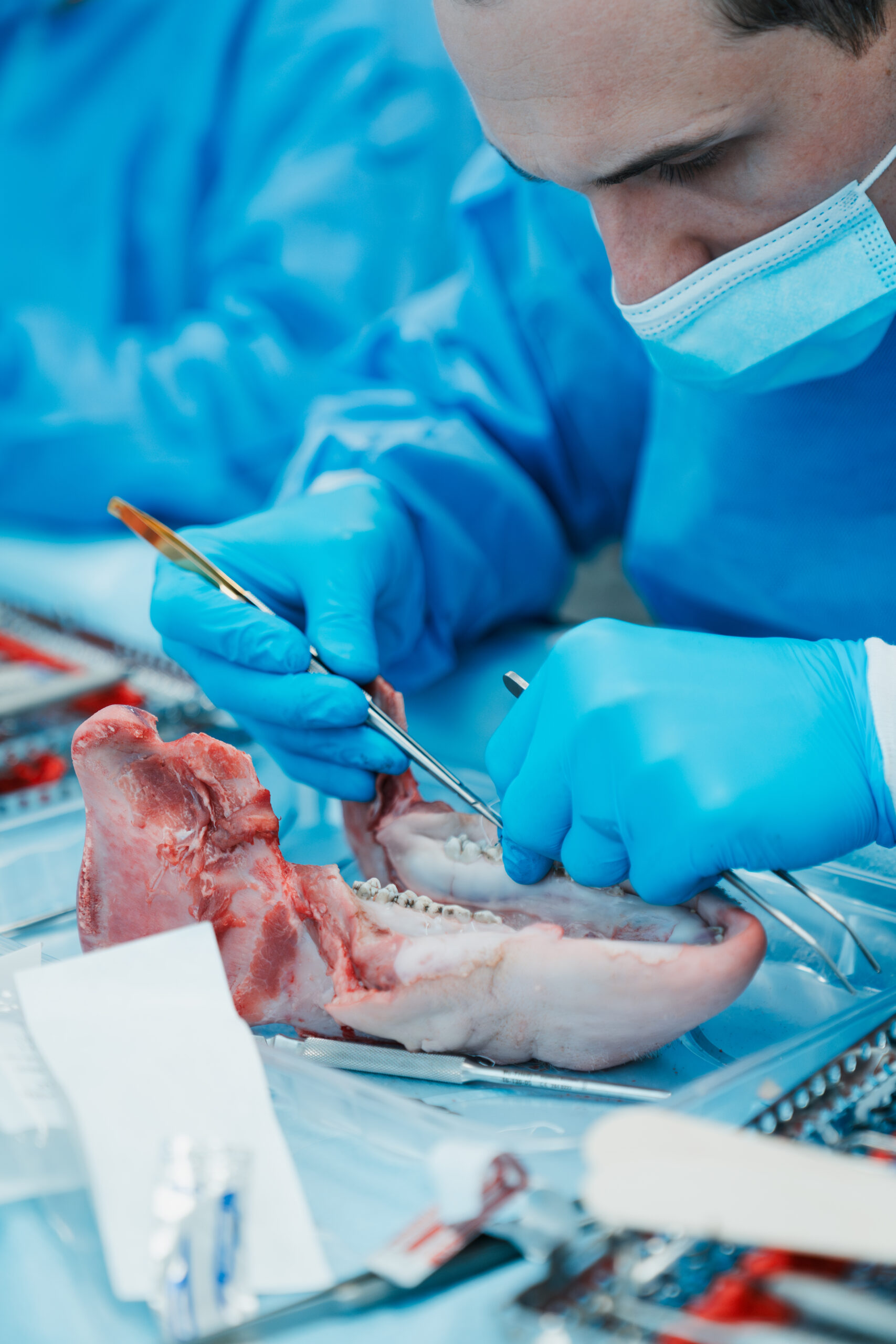
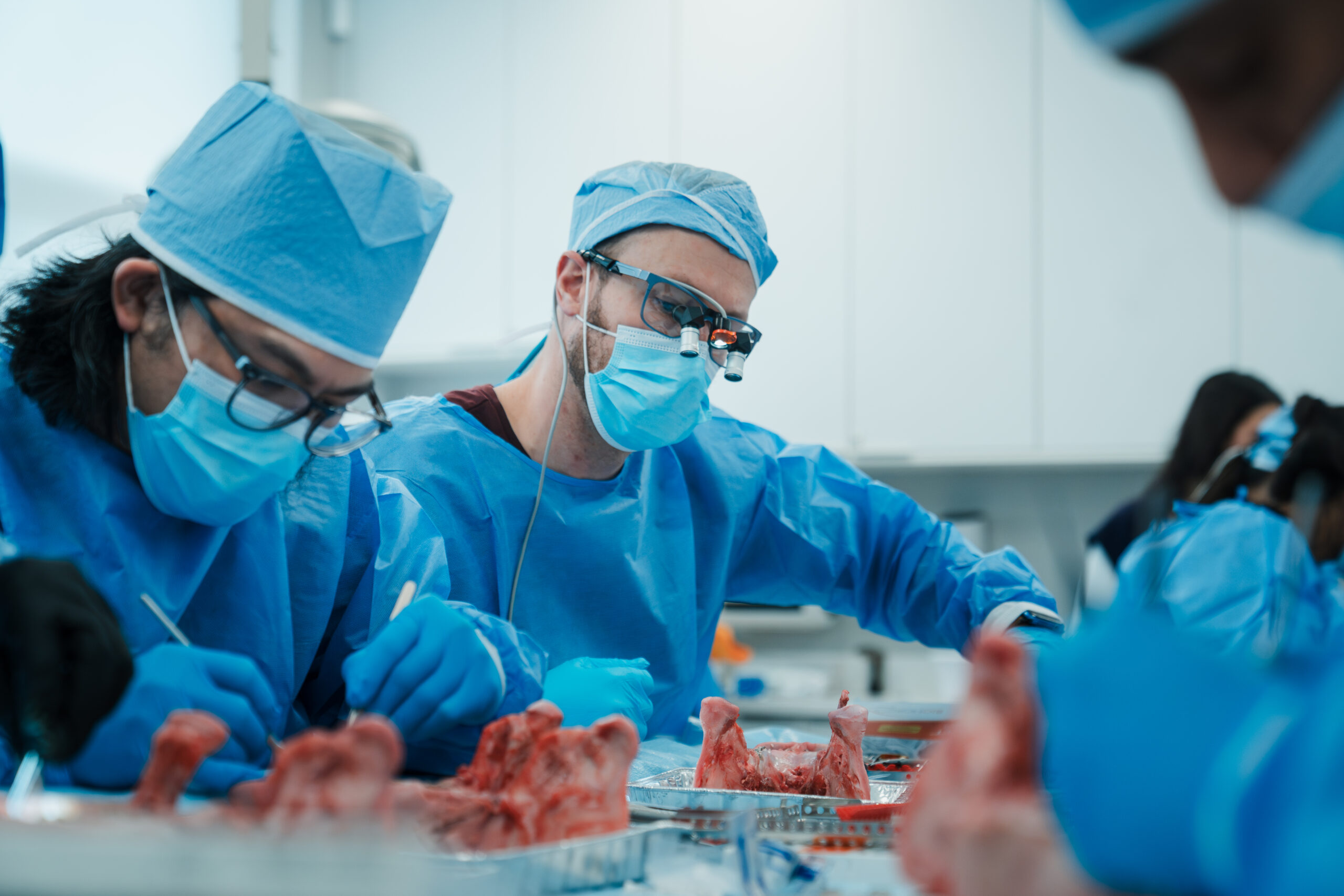
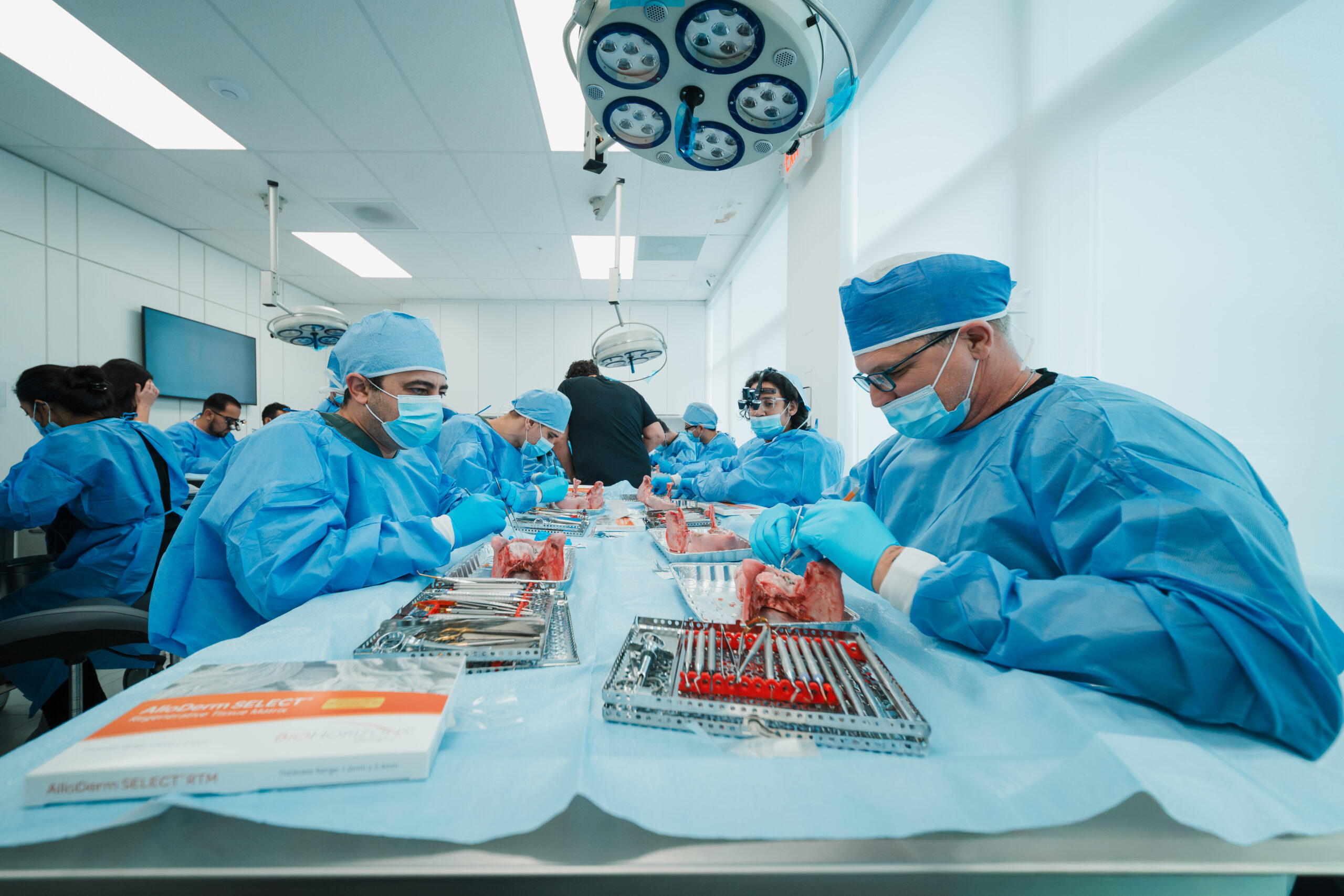
Every technique covered in the lecture is repeated by hand. Training takes place on pig jaws inside ADI's dedicated Cadaver Lab in Orlando, a surgical-grade space built for repetition, close faculty supervision, and real tactile learning.
-
Individual surgical stations with overhead lighting
-
Direct, hands-on faculty supervision throughout
-
Repetition-based format designed to build surgical confidence
Instructor
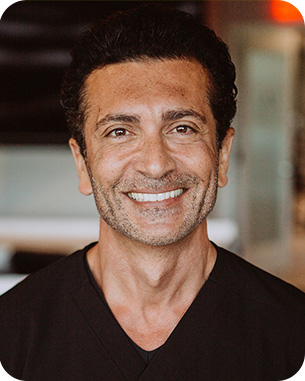
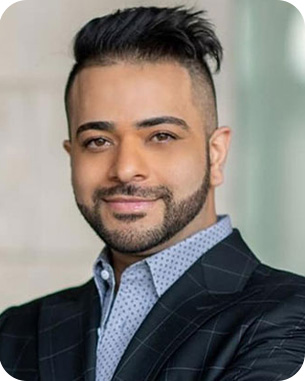
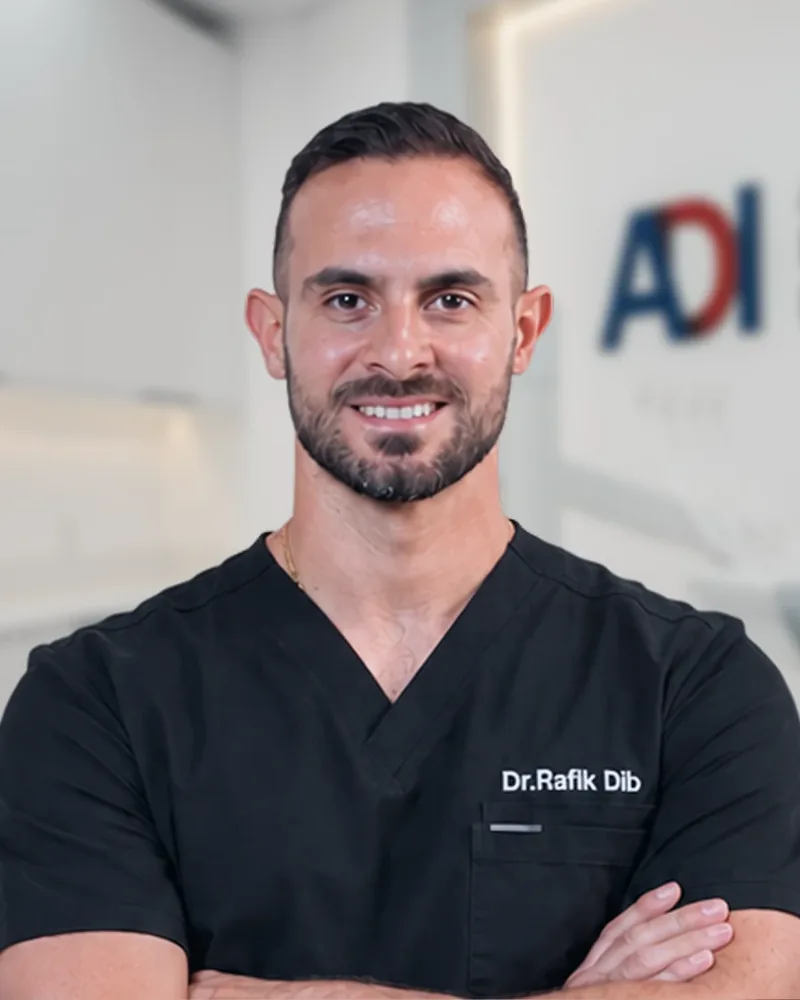
Dr. Rafik Dib, DDS, MS, PharmD
7,000+ implants placedDr. Rafik Dib, DDS, MS, PharmD, is a board-certified periodontist and Diplomate of the American Board of Periodontology, with more than 12 years of surgical experience and over 7,000 dental implants placed. He is recognized for his expertise in guided bone regeneration, complex implant reconstruction, and full-arch rehabilitation.
Owner of AVA Dental Implants Periodontics and a former Clinical Implant Educator for national Dental Support Organizations, Dr. Dib is known for translating complex biologic principles into predictable, repeatable surgical protocols — with a teaching style focused on immediate clinical application.
What Dentists Say About ADI
Hear from clinicians who trained with us.
Had a great time and learning experience at the American Dental Institute. The facility is clean and well-maintained, and the staff is incredibly welcoming and professional. It’s a quiet, ideal setting for continuing education courses—highly recommend
I had such a valuable experience at the ADI facility. The Instructors were extremely knowledgeable and approachable, making the learning environment comfortable and engaging. The course combined thorough didactic teaching with hands-on training that really boosted my confidence in performing safely and effectively. The ADI facility was well-equipped and professional, which made the experience even better. Highly recommend to anyone looking to expand their scope with continuing education!
I came to ADI for the Soft Tissue Grafting course. The course has been very informative and has provided me with several tools that I can utilize when I return to work on Monday. The entire staff has been very helpful and the food provided during the breaks are solid. I would highly encourage taking any course here.
Get Your Ticket for the Course
*This price can be divided in installments, and should be paid in full 30 days prior to the course date. Contact us for more info.
Select the date that works best for you.
Course Modules
- Biology of Bone Regeneration
- Cellular principles of GBR
- Angiogenesis and vascularization
- Critical-size defects
- Space maintenance principles
- PASS Principle (Primary Closure, Angiogenesis, Space Maintenance, Stability)
- Factors affecting regeneration success
Clinical Pearls
- Why some grafts fail despite perfect technique
- Understanding biologic limitations
- Case Selection & Treatment Planning
- Comprehensive patient evaluation
- Medical risk assessment
- CBCT interpretation
- Defect classification
- Horizontal vs vertical deficiencies
- Timing of grafting
- Risk assessment algorithm
Clinical Decision Tree
- When should you graft?
- When should you stage treatment?
- When should you avoid regeneration altogether?
- Graft Material Selection
- Autogenous bone (cortical vs cancellous grafts)
- Allografts
- Xenografts
- Alloplasts
- Biologic modifiers
- Growth factors
Evidence Review
- Which materials have the strongest long-term evidence?
- Barrier Membranes
- Principles of Guided Bone Regeneration
- Resorbable membranes
- Non-resorbable membranes
- Titanium reinforced membranes
- Titanium mesh
- Membrane fixation
- Space maintenance strategies
- Membrane exposure management
- Surgical Technique
- Step-by-step surgical protocol
- Incision design
- Flap elevation
- Periosteal releasing incision
- Decortication
- Defect preparation
- Graft adaptation
- Membrane stabilization
- Suturing techniques
- Primary closure
- Post-operative management
Highlight
- Common technical mistakes and how to avoid them
- GBR Around Immediate Implants
- Case selection
- Buccal gap management
- Jumping distance
- Immediate provisionalization
- Simultaneous GBR
- Implant positioning
- Soft tissue preservation
Highlight
- When immediate implants should NOT be performed
- Horizontal Ridge Augmentation
- Defect classification
- Flap management
- Layering techniques
- Particulate graft stabilization
- Membrane selection
- Predictable horizontal augmentation protocols
- Soft Tissue Management
- Soft tissue phenotype
- Keratinized tissue
- Vestibular depth
- Flap advancement
- Tension-free closure
- Soft tissue grafting indications
Highlight
- Prevention of wound dehiscence
- Complications & Surgical Rescue
How to manage
- Membrane exposure
- Graft infection
- Partial graft loss
- Flap dehiscence
- Implant thread exposure
- Soft tissue deficiencies
- Inadequate regeneration
- Failed GBR cases
Note
- Includes real complications from clinical practice and treatment strategies
- Clinical Case Series
- Horizontal augmentation
- Immediate implant with GBR
- Delayed implant reconstruction
- Esthetic zone defects
- Posterior implant reconstruction
- Complex ridge deficiencies
Note
- Discussion includes treatment planning, surgical execution, healing, complications, and long-term outcomes.
A Facility Built for Hands-On Learning
ADI's Orlando campus is built for real surgical practice. The Cadaver Lab provides individual stations, surgical-grade lighting, and close faculty supervision, while the adjacent classroom and clinic spaces support the full workflow, from lecture to hands-on execution.
Frequently Asked Questions
16 CE credits, through ADI's Nationally Approved PACE Program.
At American Dental Institute in Orlando, FL, in ADI's dedicated Cadaver Lab.
Both dates offer the same course content and format. You can choose whichever fits your schedule.
Your registration includes breakfast and lunch on both course days, coffee breaks throughout the program, and all course materials and cadaver lab supplies. Personal items are not included.
Thank you for the contact!
An ADI advisor will get in touch as soon as possible. If you prefer, you can schedule an initial consultation now.
Schedule initial consultation now