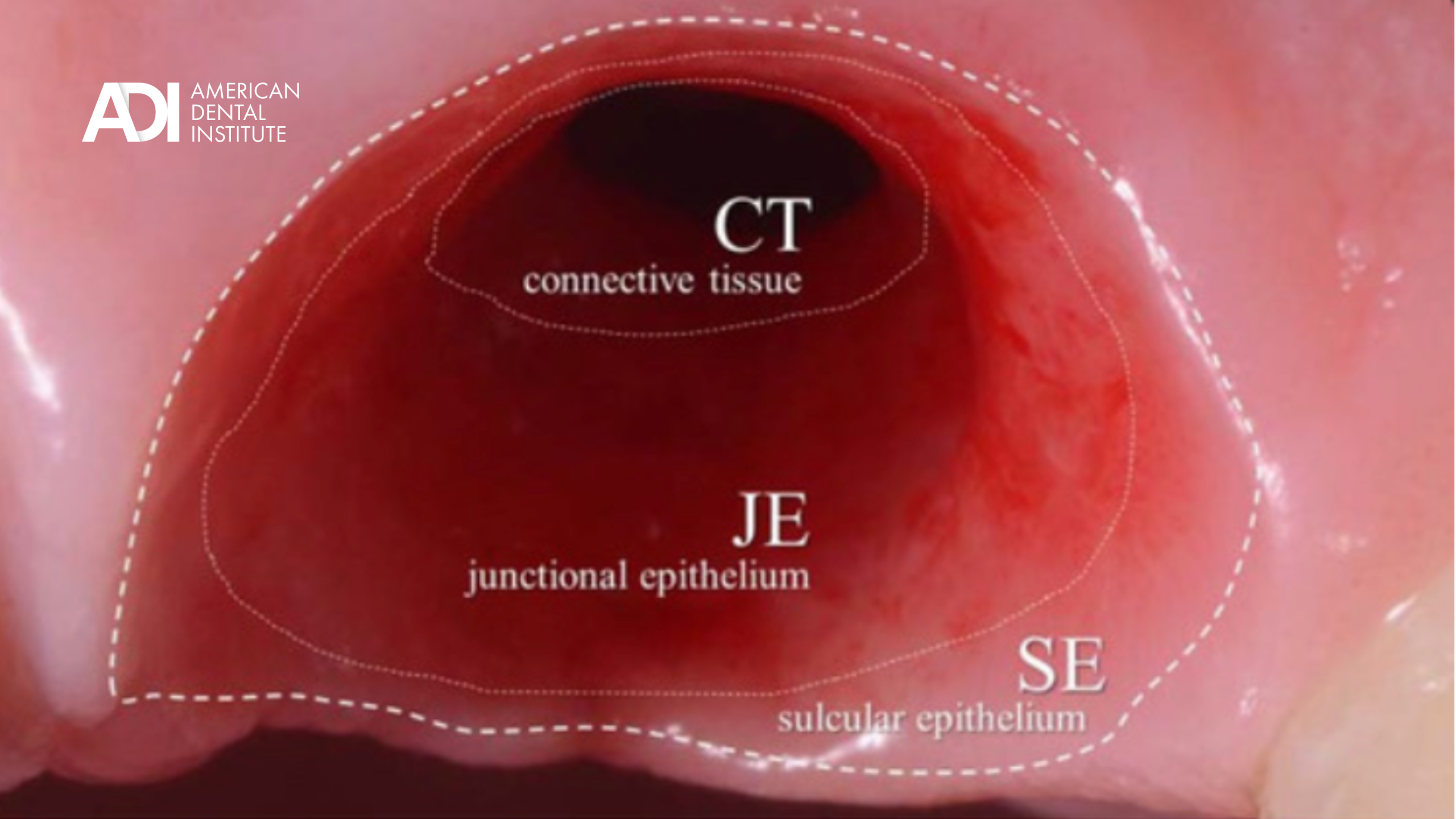
The presence of keratinized mucosa (KM) around dental implants has been a topic of considerable clinical relevance. While implant osseointegration depends primarily on bone health, the peri-implant soft tissue plays a pivotal role in long-term stability, hygiene maintenance, and patient comfort.
- Biological Barrier and Stability
Keratinized tissue forms a firm and resilient barrier that supports the junctional epithelium and resists mechanical stress from mastication and oral hygiene procedures. Studies show that adequate KM enhances the soft tissue seal, reducing the risk of peri-implant inflammation and recession (Lang & Löe, 1972; Wennström & Derks, 2012). - Improved Plaque Control and Comfort
Implants surrounded by minimal or no KM are more prone to plaque accumulation, leading to mucositis or peri-implantitis (Schrott et al., 2009). Additionally, patients often experience discomfort during brushing in areas lacking keratinized mucosa, resulting in poor hygiene compliance. - Clinical Evidence
A systematic review by Lin et al. (2013) concluded that insufficient KM (<2 mm) is associated with increased mucosal inflammation, bleeding on probing, and soft tissue recession. Furthermore, preserving or augmenting KM during implant surgery is linked to enhanced peri-implant health and aesthetic outcomes.
Conclusion
Although implants can survive without keratinized mucosa, having an adequate band of KM contributes significantly to long-term success. It improves patient comfort, facilitates hygiene, and maintains soft tissue stability—key components for predictable and esthetic implant therapy.
References
- Lang, N. P., & Löe, H. (1972). The relationship between the width of keratinized gingiva and gingival health. J Periodontol.
- Wennström, J. L., & Derks, J. (2012). Is there a need for keratinized mucosa around implants to maintain health and tissue stability? Clin Oral Implants Res.
- Schrott, A. R. et al. (2009). Lack of keratinized mucosa associated with increased plaque accumulation and bleeding on probing around implants. Int J Oral Maxillofac Implants.
- Lin, G. H. et al. (2013). The effect of keratinized mucosa width on peri-implant health: A systematic review. J Periodontol.